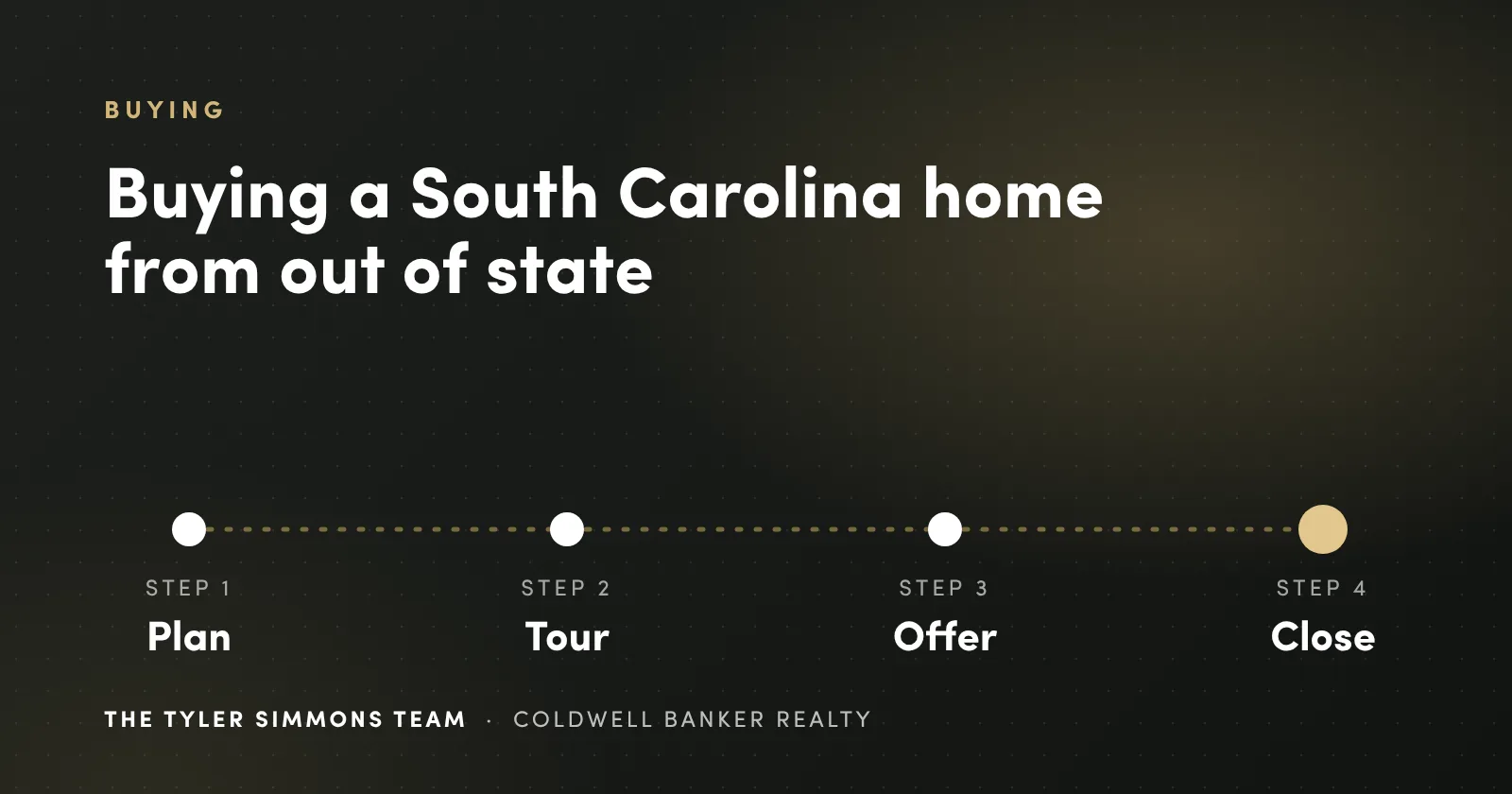
Step 1: Pick the area before the house
The most common mistake long-distance buyers make is falling in love with a listing before they know the area. Start with the questions that shape daily life: where you will work, how long a commute you will accept, school priorities, how much yard and space you want, and what you like to do on weekends.
A good local agent should be able to turn those answers into a short list of communities and explain the tradeoffs between them before you look at a single house.
Step 2: Get pre-approved with a lender licensed in South Carolina
A pre-approval tells you what you can comfortably spend and shows sellers you are serious, which matters even more when you are not there in person. Use a lender licensed to lend in South Carolina who can explain local costs such as property taxes and insurance, since those can look very different from what you pay now.
If you are selling a home where you live now, ask your lender how that sale affects your approval and timing.
Step 3: Tour remotely, then visit with a focused list
Live video tours let you walk through a home with your agent, ask questions in real time, and see things listing photos leave out, like road noise, neighbors, and the condition of the yard. Ask your agent to drive the neighborhood on camera too.
Once you have narrowed it down, plan one focused trip to see your top homes in person. Some buyers are comfortable making an offer on a home they have only seen by video, but only do that if you understand what you are giving up and have a strong inspection plan.
Step 4: Write a strong offer and protect yourself
Your agent will help you price the offer using recent sales and current competition. South Carolina contracts typically include a period for inspections and other due diligence, and the length of that period and any related fee are negotiated as part of the offer. Use that time well: schedule the home inspection quickly, and add specialist inspections such as wood-destroying insect, HVAC, roof, or septic when the property calls for it.
Your agent can attend inspections and walk you through the findings on video, so you can make decisions without flying back.
Step 5: Close with a South Carolina attorney
South Carolina is an attorney state. The South Carolina Supreme Court has held that licensed attorneys must be involved in residential real estate closings, supervising key steps such as title work, closing, disbursement of funds, and recording. As the buyer, you generally get to choose the closing attorney.
Many attorneys can arrange for out-of-state buyers to sign documents remotely or by mail. Ask early about what is available so you can plan your travel.
Watch out for wire fraud
Criminals target home buyers with fake emails that look like they come from the closing attorney or agent and contain changed wiring instructions. Never wire money based on instructions received only by email. Before sending funds, call the closing attorney's office at a phone number you found independently, not one listed in the email, and confirm the instructions.
After closing: claim the 4% legal residence rate
If the home will be your primary residence, apply with the county assessor for the 4% legal residence assessment instead of the standard 6%. It also removes school operating millage from your tax bill. Counties typically ask for proof such as a South Carolina driver's license and vehicle registration at the new address, so update those soon after you move in.
Talk with a local agent
Our team works with out-of-state buyers across Columbia, Lexington, Lake Murray, Blythewood, York County, and Myrtle Beach. Tell us about your move and we will help you build a plan, whether you are ready to tour this month or just starting to research.
Sources
- USFN: South Carolina Supreme Court analyzes unauthorized practice of law in closings
- Richland County: Legal Residence (4%) assessment
This guide is general information, not tax, legal, or lending advice. Tax rates and rules change, so confirm details with a qualified professional.